
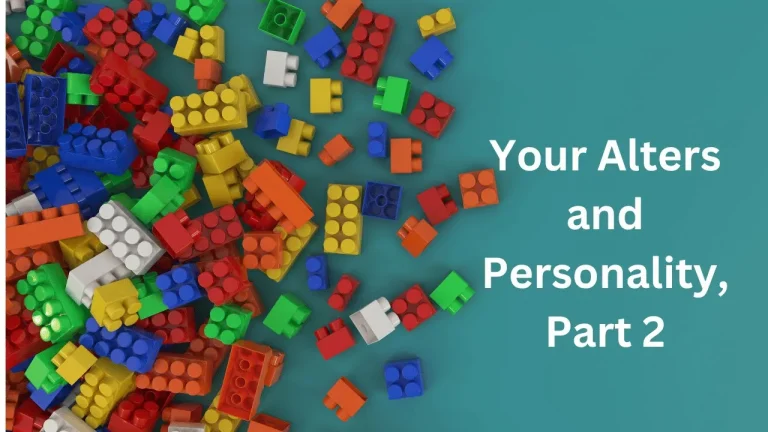
Are alters complete personalities? This video uses Lego and teacup metaphors to explain why fragmentation divides one personality into parts instead of creating new ones...

Are alters full personalities? This video explores the structural dissociation model to explain why each part carries only part of the whole personality...

Protector alters often sound critical or harsh, but their true motivation is safety. This video explores how appreciation can turn protectors into allies...

What keeps DID going? This video explains how conflict between alters and avoidance of trauma memories maintain dissociation—and why recovery depends on addressing them...
Quick tips for preparing your system for holiday family visits, reducing triggers for young and trauma-holding parts, and strengthening internal safety...

System communication doesn’t look the same for everyone. This video shares four apps—notes, Discord, Simply Plural, and Antar—that can help systems connect...
Daily schedules can feel overwhelming for systems. This video explains why DID and OSDD make routines harder and what challenges to expect in building structure...

Critical or perfectionist alters can feel cruel, but their intent is often protection. This video shows how reframing and modeling communication can turn them into allies...
Daily structure is more than routine—it’s a stabilizing tool for systems. This video shares seven ways structure supports DID and OSDD recovery...